Gender-diverse Australian sailors barred from US nuclear submarine training under Aukus, documents reveal
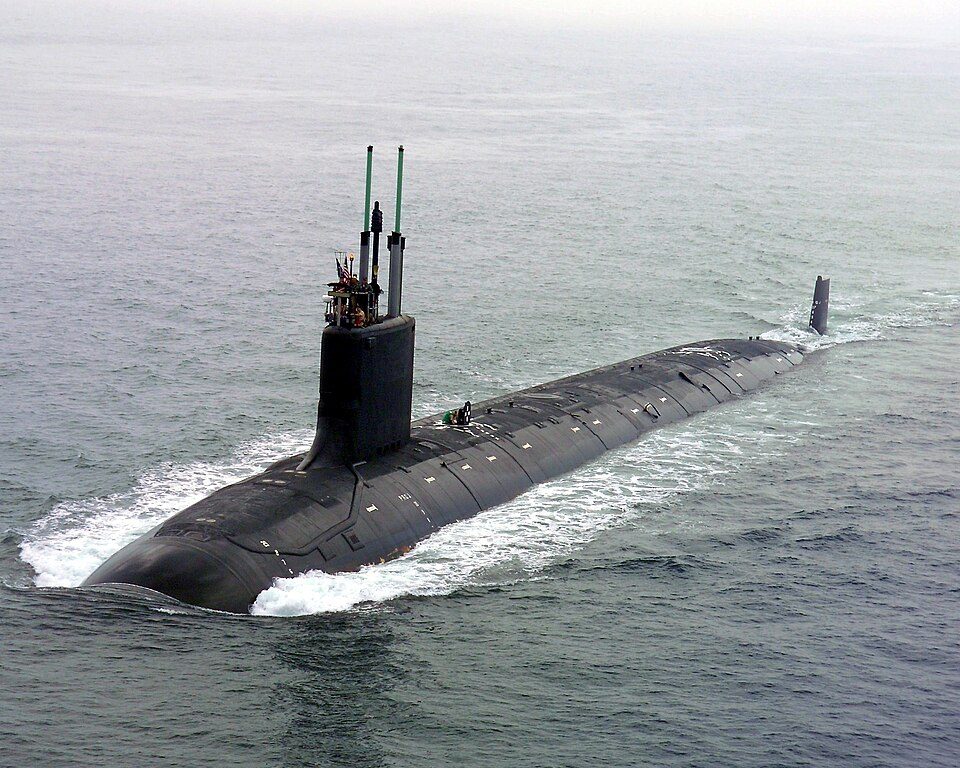
A US Virginia-class submarine returning to port; file photo. Photo: U.S. Navy photo by General Dynamics Electric Boat · Public domain · Wikimedia Commons
The Aukus pact is effectively forcing the Australian navy to comply with a US ban on transgender people in the military, with gender-diverse navy recruits prevented from starting a career in nuclear submarines because they would not be able to train on US boats.
Internal Australian Defence Force documents show transgender and non-binary sailors and officers are explicitly barred from Australia's nuclear submarine training program because of US policies. An internal defence briefing released under freedom of information laws said that while ADF policy on equality and inclusion was unchanged, 'US government policy is different'.
'ADF personnel undertaking duty in the US (including training) are required to comply with US policy,' the briefing said. 'Consequently, transgender and nonbinary ADF personnel and ADF career applicants are currently unable to commence the SSN training pathway.' SSN refers to nuclear-powered attack submarines.
Australia, which does not yet have a nuclear submarine fleet of its own, has hundreds of sailors and officers training on US nuclear submarines and at US bases. Under the Aukus deal, Australia is to buy three Virginia-class nuclear submarines from the United States beginning in 2032, and US-flagged nuclear submarines are already rotating through Australian ports.
At a women in defence event in October, Rear Admiral Tish van Stralen, one of the highest-ranking women in the Australian navy, was asked how the defence force was managing the recruitment of gender-diverse and LGBTQ+ Australians into the nuclear submarine pathway given the US directive. She said the ADF was a diverse and equal opportunity employer, but that potential recruits for the nuclear submarine program were told the ADF was subject to policies and laws in other countries.
'We also have an obligation, a duty of care to our people, so we do not want to put our people into any sort of harm's way or anything that might adversely affect them,' she said, adding that the navy would seek alternative career paths for gender-diverse recruits barred from the nuclear program. She noted that the United Kingdom, Australia's other Aukus partner, had more liberal policies and that training opportunities may arise there.
The US policy shift came amid the broader Aukus build-up. US Defence Secretary Pete Hegseth last year issued a directive to eliminate diversity, equity and inclusion offices and initiatives across his department, and has sought to bar transgender personnel from the US military. Donald Trump signed an executive order in January 2025, the first week of his second term, banning transgender service personnel.
Crewing Australia's proposed nuclear submarine fleet is likely to prove one of the Aukus agreement's most critical and sustained challenges. Virginia-class submarines carry a complement of 135, more than double the crew of Australia's diesel-electric Collins-class boats. Defence Minister Richard Marles said last week the Aukus timeline presented a significant training challenge. 'We just need to be training more people and that's what we're doing,' he said at HMAS Stirling, the West Australian base through which US nuclear-powered submarines rotate.
The defence department did not respond to questions about the impact of adhering to the US policy directive, including how many Australian service personnel have been prevented from undertaking nuclear submarine training. The government's own nuclear-powered submarine workforce strategy urges defence to proactively expand the talent pool through active inclusion of underrepresented groups, including women, First Nations Australians and regional communities.