New resistance training guidance may simplify your workout
Strength training need not mean a daily gym visit, very heavy weights or complicated equipment. The biggest practical step for someone who does none is to begin a regular, manageable routine. A research overview behind updated guidance found that even modest resistance training can improve strength, muscle size, power, endurance and everyday physical function compared with doing no training.
Why strength matters as people age
Muscle mass tends to decline with age. Without activity to maintain it, people can lose fitness and ability before noticing a clear problem. Difficulty rising from a chair or walking upstairs may be an early sign that strength has slipped. Reduced strength can accompany balance problems, joint discomfort and weaker bones; suitable strengthening work can support function and independence.
Aim for a repeatable routine
The guidance discussed in the source recommends resistance training at least twice a week for healthy adults, working all major muscle groups with meaningful effort. Australian adult guidance also includes strengthening at least twice weekly. Meaningful effort does not mean starting at a maximum load, exercising through pain or exhausting yourself. The difficulty should match your ability and health.
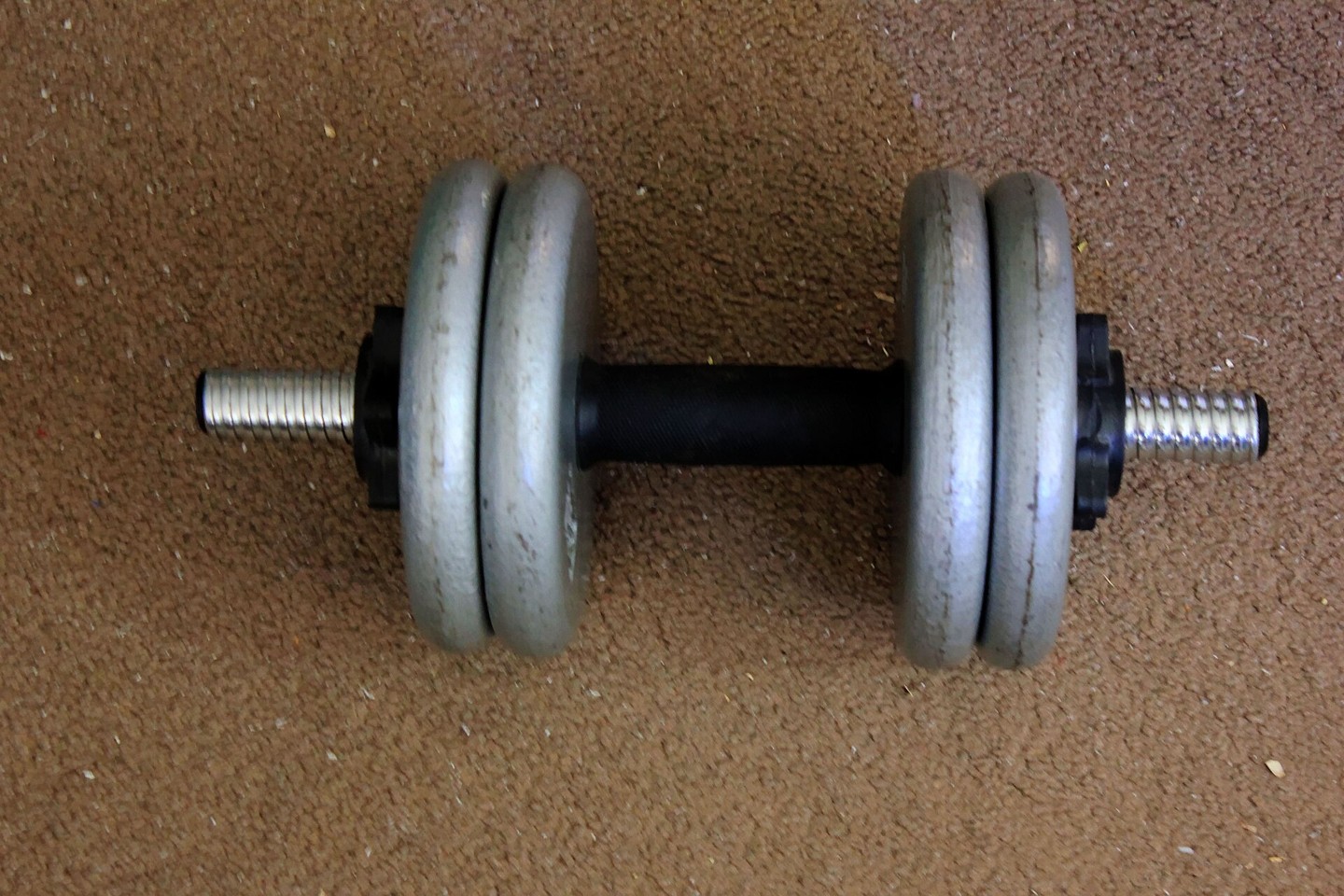
Resistance training makes muscles work against a load. That can come from dumbbells, kettlebells, barbells, weight machines, elastic resistance bands or your own body weight. For general fitness, a suitable home routine using body-weight movements and bands can be as useful as gym equipment. Getting into the habit matters more than owning a particular machine.
Examples to learn include squats, lunges and push-ups, with push-ups adapted to a wall, counter or floor. Once the movement is controlled, bands or light weights can add challenge. These are examples to adapt, not instructions that every reader should perform an unsupported squat, floor push-up or lunge immediately.
Cover pushing, pulling and the core
A balanced routine covers upper and lower body movements that push a load away and pull it towards you. The core includes the abdomen, back, pelvis and buttocks. Body-weight exercises such as a plank or bird dog can train these areas when suitable for the person.
Squats and lunges work the front and back of the thighs and the buttocks. Chest presses and push-ups train the chest and the muscles at the back of the upper arm. Rows and band pull-downs work the back. Learning the correct movement is more important than copying a heavy weight or an advanced variation.
Increase the challenge gradually
Progressive overload means slowly increasing the work muscles do as they adapt. The source gives an example of a roughly 2.3 kg weight: if three sets of ten or more repetitions become easy, a small increase in weight with fewer repetitions can restore the challenge. Repetitions can then gradually build back towards three sets of ten. The size and timing of an increase should be individual, not automatic.
You do not need to work muscles to complete failure to benefit. The source offers two to three sets of eight to ten repetitions for each exercise, rather than piling on five or six sets; it advises no more than four sets in that general example. This is not a universal prescription. Australian advice for older adults often uses ten to fifteen repetitions, showing why a physiotherapist or exercise physiologist may adjust the dose to your needs.
Start safely and allow recovery
If you are new to training, have been inactive, have an illness or injury, or are unsure about a movement, seek advice before starting. Begin with light resistance, warm up, leave enough clear space, move with control and breathe normally rather than holding your breath. Avoid movements that cause pain. Older adults are advised to allow about 48 hours between strength sessions; a professional can plan recovery and progression.
Stop and seek medical advice for chest discomfort, unusual breathlessness, dizziness, a racing or irregular heartbeat, or persistent joint or muscle pain. Severe chest pain or severe shortness of breath needs urgent help: in Australia call 000 for an ambulance. General fitness guidance is not a personal rehabilitation plan.
Choose support that helps you continue
A routine you enjoy is easier to keep. A class, training partner or progress check can help with accountability. Compare gyms, community or senior centres and YMCA-style programs for options within your budget; availability and fees vary. A physiotherapist, exercise physiologist or suitably qualified trainer can teach technique and design a program for your ability. The goal is a safe habit you can maintain, not a perfect-looking routine you abandon.