'Six months later I woke up in a psychiatric hospital': the nangs habit behind NSW's tough new laws
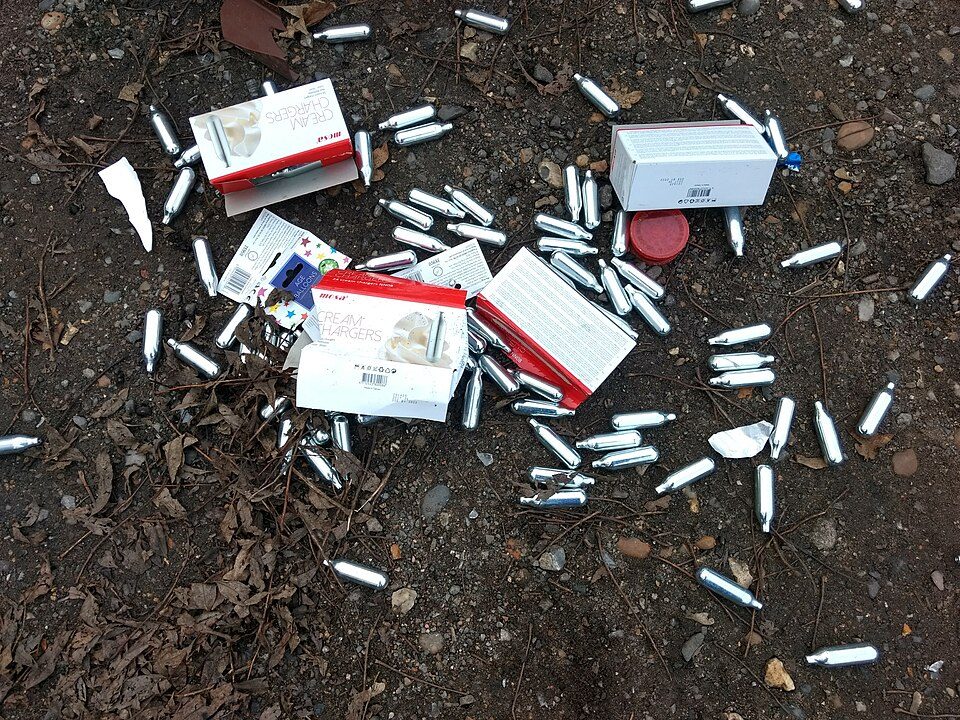
Discarded nitrous oxide canisters in a car park; illustrative file photo. Photo: Philafrenzy · CC BY-SA 4.0 · Wikimedia Commons
Tough new restrictions on the sale and supply of nitrous oxide - the party drug known as 'nangs' - are now in force across NSW, and they owe much to a young man who lost six months of his life to the drug and then ran 300 kilometres to change the law.
Sam Bramman first tried nangs at a house party when he was 19. Nangs is Australian slang for small steel canisters of nitrous oxide meant for whipped cream dispensers - the same 'laughing gas' dentists use as an anaesthetic, which makes users feel calm, relaxed and light-headed. Like many young people, he thought they were harmless.
Within a month or two he was travelling between tobacconists during the day to use alone, often going through 50 bulbs a day. Sometimes the pressurised gas left freeze burns on his fingers; other times his lips went purple and he did not notice. 'Nangs helped me escape from feeling aimless. But it reached a point where I needed it just to function,' he said.
After six months of heavy abuse, he entered psychosis and drove from Sydney to Queensland in a paranoid, detached, fearful state, convinced police were after him. He walked the streets of Surfers Paradise yelling at cars, slept in his car and hotels, and cut holes in furniture and wrote on walls in a hotel room. His parents flew up from Sydney, found him and took him to hospital in Byron Bay, where he became so agitated that security guards pinned him down and sedated him. Later that night, he woke up in a psychiatric hospital.
He spent two months in the ward, then a year and a half on anti-psychotic medication back in Sydney, barely able to shower or brush his teeth. As he was weaned off the medication, his family encouraged him to go to the gym - which, he says, was probably the best decision he ever made. It gave him an idea: he would run from Sydney to Canberra, about 300 kilometres, to raise awareness of nitrous oxide misuse and call for law reform.
He trained for a year, messaging almost every journalist in Sydney to cover his story. At 6am on 23 June this year, farewelled by 200 supporters, he set off, arriving at Parliament House three days later. A week after that, he stood beside NSW Health Minister Ryan Park as the minister announced law reform on nangs, acknowledging Mr Bramman's advocacy.
The new restrictions, in force since 5 November, limit retail sales of bulbs containing 8 to 10 grams of the gas to a total of 250 grams per customer per day, ban canisters or cylinders containing more than 10 grams from retail sale entirely, and prohibit supply to anyone under 18. Same-day delivery is banned, sales are barred before 5am and after 10pm, and the products can no longer be visibly displayed in shops. Maximum penalties are $2,200 for individuals and $11,000 for corporations per offence, with exemptions for legitimate food, beverage, industrial and therapeutic uses.
'The prevalence of nitrous oxide abuse is escalating in our community, and it is having a profound impact on the health of our young people,' Mr Park said when announcing the crackdown. Health authorities warn nitrous oxide misuse can cause serious neurological injuries including spinal cord damage, as well as severe frostbite, lung injuries, cardiac abnormalities and asphyxiation.
'I never thought nangs would take control of my life and leave me hospitalised,' Mr Bramman said. 'This drug was cheap, easy to get, and because they were legal, I thought they were safe. If these laws help even one young person avoid the road that I went down, it will be worth it.'
Now in recovery, he is training to host a 24-hour charity run and is working on an education program about drug addiction for schools. His goal is to visit every high school in NSW. 'For anyone struggling with addiction and the cloud hanging over them: you are not alone,' he said. 'Do not stop thinking about, and acting on, getting yourself out of that cloud.'