Scoliosis treatment: Can it help as you get older?
Scoliosis is a sideways curve and rotation of the spine, often described as a C or S shape. It is not only a childhood condition: older adults can have a curve that began earlier or developed through wear and tear. Many have no symptoms. For those with pain or movement problems, an individual physiotherapy plan can help maintain function; surgery is reserved for selected severe cases.
Why a curve can develop later in life
A childhood curve can continue into adult life and sometimes worsen. Alternatively, age-related changes can create a new curve. The cushioning discs between vertebrae gradually lose height; if a disc collapses more on one side than the other, the spine can tilt and curve. An uneven shoulder or hip, leaning to one side or difficulty standing upright may be noticeable signs.
Do not assume that every change in posture or episode of back pain is scoliosis. A clinician examines the spine, ribs, hips and shoulders and may arrange imaging or specialist assessment where needed. Treatment depends on age, the curve, symptoms and function rather than appearance alone.
How alignment changes affect movement
A sideways shift can create unequal muscle loading. With a lean to the right, for example, muscles on the right may shorten and become compressed while those on the left remain lengthened. Muscles held in a lengthened position may work less effectively, contributing to pain. If a spinal nerve is compressed, tingling or numbness can occur in one or both legs.
A curve higher in the mid-back can limit trunk rotation and movement of the shoulders and neck. A lower-back curve can affect the back and hips. Uneven alignment may also make one leg function as if it is shorter than the other, placing more pressure on the knee, hip or ankle of the longer side.
The original report describes a shoe heel lift as one option when a measured leg-length discrepancy exceeds half an inch, about 1.3 cm. That is not a reason to select a lift yourself: a professional must establish whether the difference is structural or related to posture and decide whether a lift and its height are appropriate.
Physiotherapy aims at comfort and function
For symptomatic adults, physiotherapy commonly aims to ease pain, compensate for muscle imbalance and preserve useful movement. It is not a promise to straighten every adult curve. Exercises can include stretching shortened tissues, training the muscles that support the trunk and practising posture and movement control. The degree and position of the curve, pain, balance and other health conditions all affect the plan.
A diagonal stretch is one example, not a universal exercise
One exercise described is a modified child's pose. Starting on hands and knees with knees apart and big toes touching, the person keeps the head and neck aligned with the spine, moves the hips back toward the heels, extends the hands forward and rests the forehead on a mat. If the right side is the shortened side, the hands are moved diagonally left, then back. A physiotherapist should first confirm the correct direction and whether kneeling and this position are safe for you.
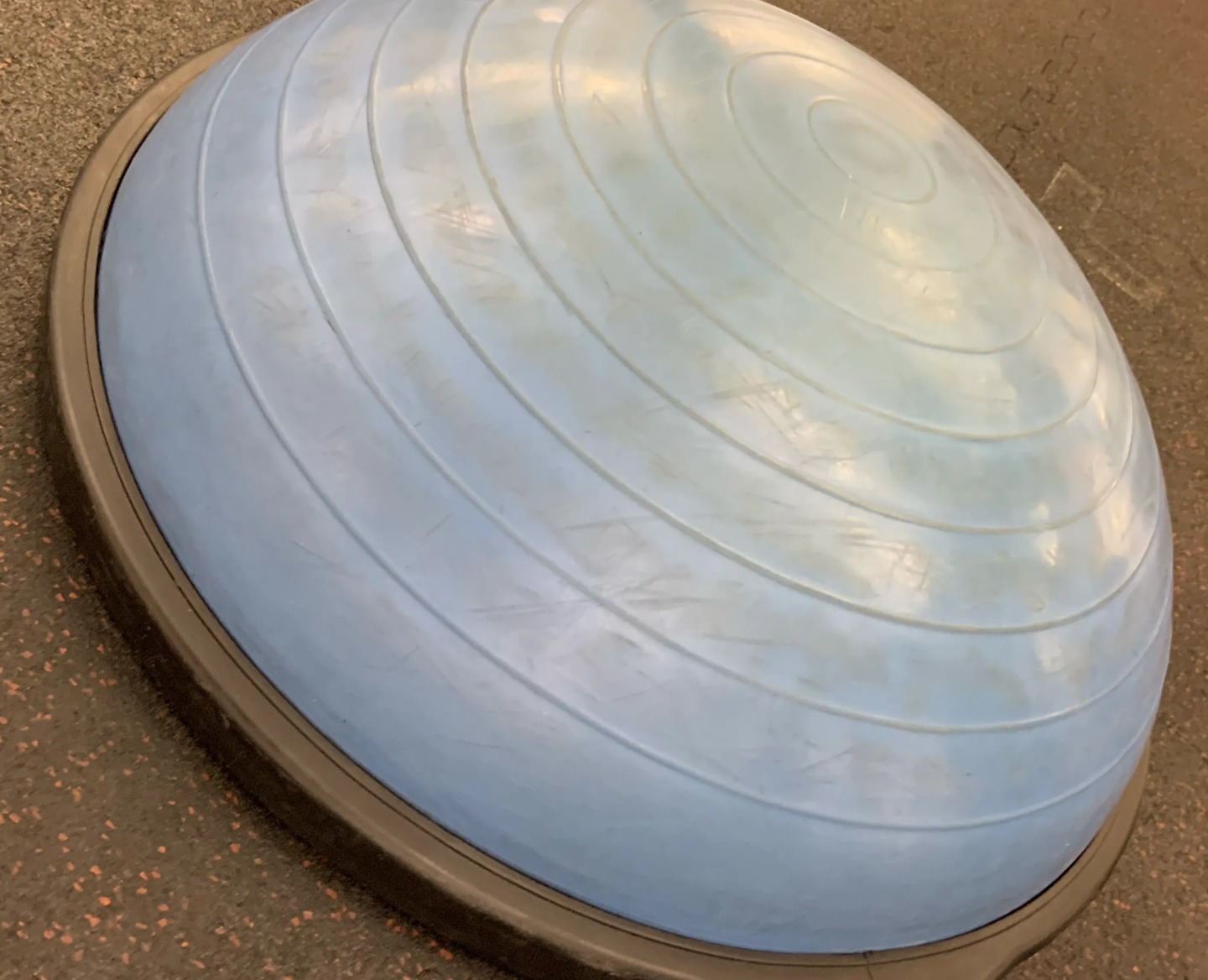
Modified planks can strengthen the core. A stability ball is another tool, because an unstable surface makes trunk muscles work harder, but it can also challenge balance. Do not start unsupported ball exercises if you are unsteady. Choose equipment and modifications with a professional rather than copying an exercise solely from its description.
How the bird dog example works
The bird dog, also called an opposite arm and leg lift, trains trunk strength and control. The starting position is on all fours, hands under shoulders and knees under hips. Extend the left leg behind and the right arm forward until they are parallel to the floor, keep the hips level and abdominal muscles engaged, hold briefly, then return. Repeat with the other arm and leg.
The source gives three sets of 10 repetitions as an example, not an individual prescription. Your physiotherapist may use fewer repetitions, a smaller movement or a different exercise, particularly with painful wrists or knees, osteoporosis, a recent operation or balance problems. Do not push through increasing pain, numbness, weakness or dizziness.
When to get medical help
Arrange a review for new back pain, worsening symptoms or difficulty with sleep, walking or daily tasks. Seek urgent care for sudden severe pain, fever or feeling unwell with back pain, inability to walk, new limb weakness or numbness, unexplained weight loss, or changes in bladder or bowel control, including difficulty passing urine. Back pain with breathing difficulty or after a serious accident requires a call to 000 in Australia.
Many people with scoliosis remain active and do not need surgery. The useful next step is an assessment and a plan matched to the individual, not fear of the curve or an attempt to force it straight. This article is general information, not a diagnosis or a personal exercise programme.