Shenzhen Rolls Out Easier Entry, Payments and Tax Refunds for International Visitors Ahead of APEC
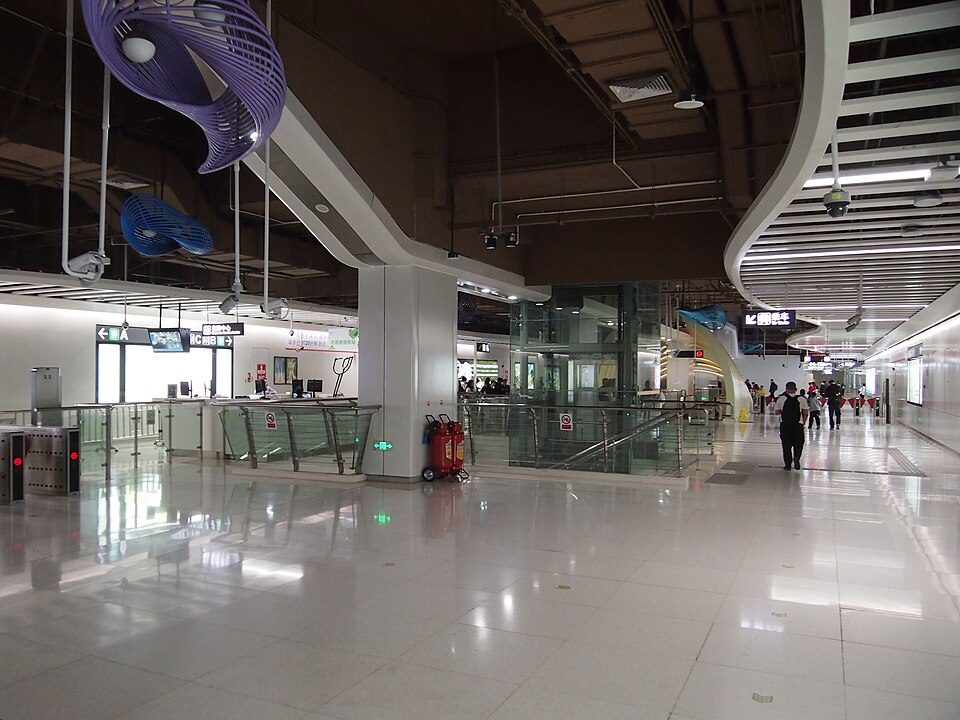
The concourse of a Shenzhen Metro station; file photo. Photo: Bob Wehn · CC BY-SA 4.0 · Wikimedia Commons
SHENZHEN — Shenzhen, the southern Chinese technology hub hosting the 33rd APEC Economic Leaders' Meeting, has eased entry, payments and shopping refunds for international visitors, Mayor Li Yun announced on Saturday at the first media briefing since the Media Center for the 2026 APEC Economic Leaders' Week opened.
To facilitate the smooth arrival of summit delegates, Shenzhen has designated special lanes at nine ports covering sea, land, air and rail access points.
The city is equipped to handle international financial transactions, with more than 3,000 ATMs allowing withdrawals with foreign cards and over 1,600 bank branches offering currency exchange. All Shenzhen subway gates now accept contactless payments from foreign cards. Of the city's 3,160 tax-refund stores, more than 1,000 provide immediate refunds.
To overcome language barriers, more than 7,000 AI translation devices have been deployed at entry checkpoints, airports, metro stations and shopping districts, and foreign-language signage at more than 100,000 locations has been standardized. Li emphasized Shenzhen's commitment to creating "a standing facilitation system" to ensure ongoing ease of access for international visitors beyond the summit itself.
Gong Zhenzhi, director of the Guangdong Provincial Development and Reform Commission, said Guangdong's trade with APEC economies reached 5.74 trillion yuan (about 860.3 billion US dollars) in the first nine months of the year, up 26.4 percent year on year and accounting for 65.9 percent of the province's total trade. APEC economies contributed 80.2 percent of the foreign capital actually used by Guangdong in the first three quarters and absorbed 68.4 percent of its outbound investment. Nearly half of Guangdong's 217 sister-city partnerships are with APEC economies.
Shenzhen's own trade with APEC economies grew by 40 percent, accounting for nearly 70 percent of its total, with local firms investing 4.1 billion US dollars in the region. The city counts more than 26,000 high-tech enterprises, 47 unicorns and 628 publicly listed companies, with 7.1 percent of its GDP going to research and development, according to the city's science and technology bureau. Officials said 218 sites and 43 tour routes are ready for APEC participants.