Britain to get "a voice in the room" but no vote on EU food rules under reset deal
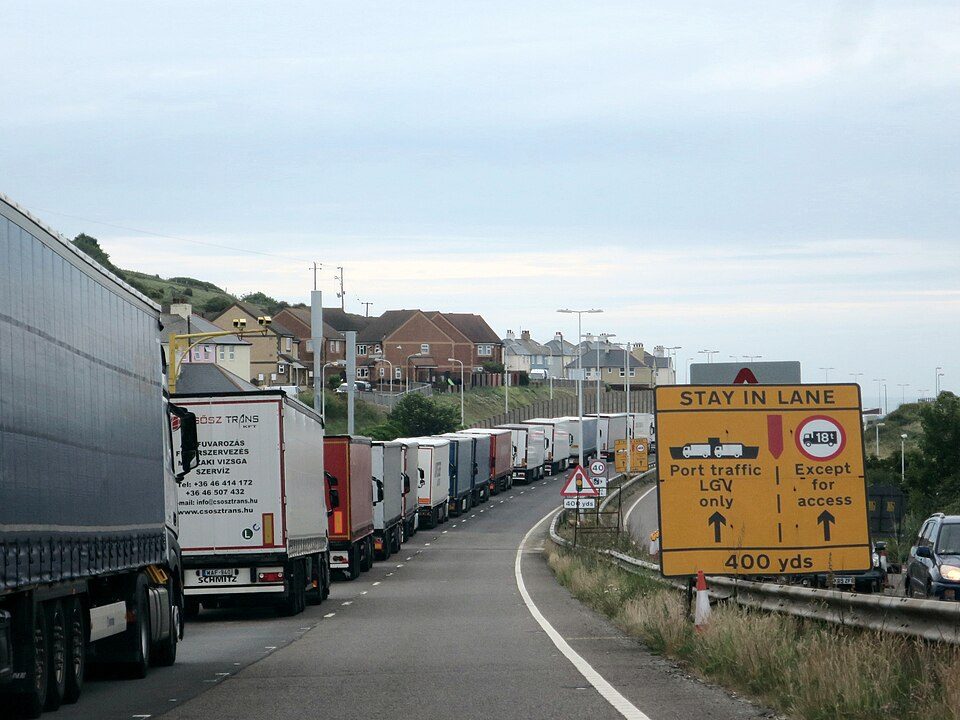
Lorries queued on the M20 in Kent; illustrative file photo. Photo: Oast House Archive · CC BY-SA 2.0 · Wikimedia Commons
Britain will have "a voice in the room" but no vote over European Union food policies under the "Brexit reset" deal the government hopes to sign at a summit on Friday, the minister for EU relations, Hamish Falconer, has confirmed.
Falconer said the UK would be involved in shaping the rules and argued the agreement to cut red tape on food trade could bring down prices for shoppers. The prime minister, Andy Burnham, has said he believes there is a "win-win" deal to be had, but critics warn the reset would make Britain "a rule taker, not a rule maker". Both the Conservatives and Reform have said they would undo the arrangements if they came to power.
The minister said the deal involved no upfront payments, and confirmed there could be an "exit clause" should a future government reverse the closer alignment. "The EU is worried about that and you can see why," he said, adding it was "reasonable" to consider the possibility. The clause is understood to reflect European concerns about the cost of rebuilding border food-safety facilities, put in place after Brexit, which the reset would dismantle.
Speaking at a Marks & Spencer food hall in central London, Falconer set out the scale of the current burden: some supermarket lorries need more than 300 pages of documentation, from export health certificates and phytosanitary certificates to vet visits and border paperwork. Consignments have been rejected over the wrong colour of ink or an inaccurate Latin name for cooked meats. Some products, such as Lincolnshire sausages, have become almost impossible to export, and Kent-grown Cox apples can face a day's wait before entering the EU.
The reset could also mean tearing up the checks introduced on goods moving from Great Britain to Northern Ireland, along with the separate "Not for EU" labelling. The food element alone is estimated to be worth an additional £5 billion, while the full package — which also covers aligning emissions trading rules and a youth mobility scheme — is calculated to add 0.4% to UK GDP.
Tom Bradshaw, president of the National Farmers' Union, welcomed the prospect of fewer inspections and less paperwork but called it "a moment of opportunity and risk", with food export volumes to the EU down by more than a third since 2019. He wants compromise on pesticides and precision-bred, gene-edited crops, where Britain is developing products such as vitamin D-enriched tomatoes. Falconer said people would have to "wait and see the detail", insisting that where the UK holds advantages, the government wants to ensure "those aren't lost under the deal".
On fears that stricter EU ingredient rules could threaten popular crisp flavours, Falconer said he wanted to "absolutely stamp down on misinformation about smoky bacon crisps", noting that major snack brands have already adapted recipes to EU rules because Europe remains Britain's biggest food and drink market.